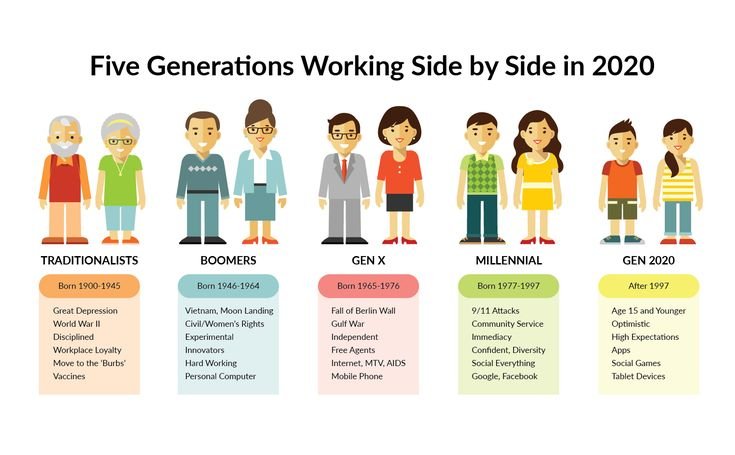
Generational labels aren't just convenient tags; they're powerful cultural shorthand, encapsulating the defining events, technological shifts, and prevailing social currents that forge a cohort's collective identity. Understanding the Evolution of Generational Nicknames: From Boomers to Gen Alpha offers a fascinating lens into how societies adapt, innovate, and sometimes clash across the ages. Each name, from the "Silent" generation to the "Born Free" Alpha, tells a story about the world they inherited and the one they're building.
At a Glance: Decoding Generational Shifts
- Generational nicknames aren't arbitrary; they reflect significant historical, economic, and social turning points.
- Early generations (Silent, Boomers) were shaped by global conflict and post-war prosperity, fostering resilience and ambition.
- Micro-generations (Gen Jones, Xennials) highlight transitional periods, bridging older and newer worldviews.
- Later generations (Millennials, Gen Z, Gen Alpha) are increasingly defined by rapid technological advancement and digital immersion.
- Slang and naming trends offer crucial insights into evolving values, inclusivity, and individuality.
- Understanding these differences can improve intergenerational communication and collaboration in work and life.
Echoes of Resilience: The Silent Generation (1928-1945)
Imagine a childhood spent navigating the Great Depression's scarcity and the looming shadow of World War II. That's the crucible that forged the Silent Generation, born between 1928 and 1945. They witnessed a world grappling with immense global conflict, followed by a meticulous, often arduous, period of post-war reconstruction. This wasn't a time for loud proclamations or radical dissent; it was a time for quiet perseverance.
Shaped by Hardship, Defined by Duty
Their defining context was one of economic hardship and social conservatism, a stark contrast to the boom that would follow. Growing up, they absorbed lessons of sacrifice, self-reliance, and making do with less. This era instilled in them a deep commitment to traditional values, often prioritizing community, family, and institutional loyalty above individual expression. You'll find their resilience reflected in their unwavering work ethic and their ability to adapt to challenging circumstances without complaint. They weren't revolutionaries; they were nation-builders, piecing back together a fractured world.
Interestingly, this cohort is sometimes referred to as the "Lucky Few." Not because they escaped hardship, but because advances in living conditions and healthcare meant they experienced slower biological aging compared to preceding generations, potentially enjoying a longer, healthier retirement than their parents or grandparents. Their priorities were clear: stability, hard work, and loyalty to the institutions they helped rebuild. Yet, they quietly navigated profound shifts in politics, technology (from early radio to the dawn of television), and evolving social dynamics, laying groundwork for future transformations.
The Seismic Shift: Baby Boomers (1946-1964)
Suddenly, the world exploded with life. Following the end of World War II, a dramatic surge in births swept across Western nations, giving rise to the Baby Boomers. This cohort, born from 1946 to 1964, emerged into a world bursting with optimism and unprecedented economic prosperity. The war was over, economies were booming, and a sense of boundless opportunity permeated the air. They were, in many ways, the beneficiaries of the Silent Generation's quiet toil.
The Architects of Modern Life
Boomers weren't just a demographic bubble; they were a cultural tidal wave. Their sheer numbers and burgeoning economic power profoundly shaped the latter half of the 20th century. Think about the proliferation of suburban living, with tract homes popping up around growing cities, or the explosion of consumer culture driven by new advertising techniques and accessible credit. Technological advancements, from widespread television ownership to early personal computing, also became part of their landscape.
Stereotypically, Boomers are seen as hardworking, ambitious, and driven by success and stability – qualities often necessary to leverage the opportunities of their era. But their story isn't just one of conformity; it's also one of profound activism. The 1960s saw a significant portion of this generation galvanized by the Civil Rights Movement, impassioned protests against the Vietnam War, and the nascent Feminist Movement. They challenged existing norms, demanding social justice and individual freedoms, fundamentally altering the fabric of society.
By the 1980s, many Boomers had ascended to positions of economic and political power, continuing to wield significant influence over policy and cultural narratives. Their legacy is an enduring one, deeply impacting political ideologies, the structure of the workforce, and societal progress. While often critiqued, their contributions to modern infrastructure, social reforms, and economic growth are undeniable.
Bridging the Gaps: The Micro-Generations
Not every generation fits neatly into a two-decade box. History doesn't operate in such rigid increments, and neither do the forces that shape identity. This is where "micro-generations" come into play – smaller cohorts that straddle the lines between larger ones, often experiencing a unique blend of influences. They are fascinating examples of transition, acting as crucial connectors in the larger generational narrative.
Generation Jones (1955-1964): The In-Between Boomers
Nestled within the broader Baby Boomer era, Generation Jones represents those born between 1955 and 1964. They experienced the tail end of the Boomers' idealism but came of age amidst growing economic uncertainty, oil crises, and the lingering social upheaval of the late 60s and 70s. Unlike their older Boomer siblings, who might have felt limitless opportunity, Generation Jones often felt a sense of "keeping up" or missed opportunities, leading to a more pragmatic worldview that foreshadowed Generation X. They grappled with disillusionment, even as they benefited from the social changes older Boomers fought for.
Xennials (Late 1970s – Early 1980s): The Analog-Digital Bridge
Perhaps one of the most relatable micro-generations for many, Xennials were born roughly from the late 1970s to the early 1980s. Their defining characteristic is a hybrid childhood: they grew up in an analog world, experiencing rotary phones, dial-up internet (if any), and physically browsing video stores. Yet, they transitioned seamlessly into digital adulthood, becoming early adopters of email, cell phones, and social media.
They remember a time before the internet was ubiquitous but quickly embraced its power, bridging the traditional and digital innovations. This unique vantage point gives Xennials a distinct empathy and adaptability – they understand both the pre-internet mindset and the digital native's perspective, making them powerful communicators and often early innovators in tech adoption.
The Rise of the Pragmatists: Generation X (1965-1980)
Following the Boomer surge came Generation X, born from 1965 to 1980. Often characterized by an independent, resourceful, and somewhat cynical outlook, Gen X grew up during a time of shifting societal norms. Divorce rates rose, women entered the workforce in greater numbers, and many found themselves as "latchkey kids," fostering a strong sense of self-reliance.
Independent Spirits in a Changing World
Unlike the Boomers' collective idealism, Gen X was often defined by a more individualistic and pragmatic approach. They witnessed the aftermath of the Boomer movements, sometimes feeling disillusioned by promises left unfulfilled. Culturally, they were influenced by the rise of MTV, grunge music, and a burgeoning skepticism towards authority.
Economically, they faced a different landscape than the Boomers, often finding job security less guaranteed and housing less affordable. This cultivated a desire for work-life balance and a pragmatic approach to careers. They were the first generation to truly embrace personal computers and the internet in their professional lives, becoming the tech-savvy leaders who built many of the digital foundations we rely on today. Their legacy is often quieter but no less significant, emphasizing entrepreneurship, innovation, and a healthy dose of skepticism.
Digitally Native and Socially Aware: Millennials (1981-1996) and Generation Z (1997-2012)
The turn of the millennium brought with it two distinct, yet interconnected, generations who fundamentally reshaped the digital and social landscape: Millennials and Generation Z. Both are digital natives to varying degrees, but their formative experiences have given them unique perspectives.
Millennials (Gen Y): The Digital Pioneers
Born between 1981 and 1996, Millennials are often seen as the bridge between the analog past and the digital future. They came of age with the internet, email, and the first wave of social media platforms. Unlike Xennials, who adapted to digital, Millennials grew up with it as a given, integrating it into their social lives and education.
Their formative years were marked by significant events like 9/11, the dot-com bubble burst, and the 2008 financial crisis, which profoundly influenced their economic outlook and career choices. Stereotypes often paint them as idealistic, collaborative, and seeking meaning in their work. They prioritized experiences over possessions, often valuing flexibility, social impact, and a strong work-life balance. Millennials were instrumental in popularizing remote work, flexible schedules, and the gig economy, demanding more from their employers and often challenging traditional corporate structures.
Generation Z (iGen/Centennials): The True Digital Natives
Following the Millennials, Generation Z (born roughly 1997-2012) represents the first truly "digital native" generation. For them, the internet isn't a tool; it's an environment. They've never known a world without smartphones, social media, and instant global connectivity. This profound immersion shapes every aspect of their lives, from communication to commerce.
Gen Z is characterized by their pragmatism, entrepreneurial spirit, and strong sense of social justice. They are incredibly adept at navigating vast amounts of information, often relying on short-form content and visual communication. Their constant exposure to global issues has fostered a deep awareness of climate change, social inequality, and mental health, often leading them to be vocal advocates for change. They are discerning consumers, valuing authenticity, ethical brands, and personalized experiences. Their comfort with diversity and fluidity in identities further distinguishes them, setting new benchmarks for inclusivity.
The Unwritten Future: Generation Alpha (2013-Present)
The youngest cohort, Generation Alpha, are children born from 2013 onwards, and their story is still very much being written. They are entering a world already saturated with technology, a world where AI, augmented reality, and seamless digital integration aren't futuristic concepts but everyday realities. Encyclopaedia Britannica aptly describes them as the "Born Free Generation," reflecting a certain liberation from the analog world that previous generations experienced.
Born into a Digital Symphony
From infancy, Generation Alpha has been immersed in a tech-saturated environment. iPads are learning tools, interactive platforms are playgrounds, and voice-activated assistants are commonplace. This continuous digital exposure has cultivated remarkable adaptability and an intuitive understanding of new technologies. They are growing up with personalized content, on-demand services, and global interconnectedness as their default state.
Characteristics emerging for Generation Alpha include a greater acceptance of differences, a strong sense of social awareness, and a cognizance of complex global issues like climate change. This isn't just theory; you can see it in their preferences. Culturally, they influence marketing with an affinity for bold colors, playful designs, and technology that simply "works." Their expectations for convenience, customization, and instant gratification are being shaped by the digital landscape they inhabit.
Looking ahead, Generation Alpha is poised to revolutionize traditional work structures. Their innate understanding of interconnectedness, creativity, and adaptability will likely drive innovative approaches to collaboration, prioritizing flexibility and purpose over rigid hierarchies. As they mature, they will define new societal norms, further pushing boundaries around identity, communication, and global citizenship. To truly understand where our society is headed, we must explore new generation nicknames and the emerging characteristics of this incredibly influential cohort.
Peeking into Tomorrow: Future Generations and Naming Trends
What comes after Alpha? The letter Z famously marks the end of the Latin alphabet, prompting speculation about how we'll name the generations that follow. While the specific name for the post-Alpha cohort remains to be seen, we can anticipate that future generations will embody a fascinating fusion of tradition and innovation, perpetually navigating rapid technological advancements and ever-increasing global interconnectedness.
Evolving Beyond the Alphabet
The naming of generations often stems from significant cultural or historical markers. Perhaps future names will be rooted in major scientific breakthroughs, ecological shifts, or even abstract concepts that define their era. What's clear is that the trends in personal naming today already offer clues about the values these future generations will embody.
We're seeing a significant marker of societal progress towards inclusivity in the rise of gender-neutral names. This reflects a broader cultural shift towards breaking down binary norms and embracing individual identity. Similarly, the popularity of alternative spellings signals a move towards individuality and creativity, where parents often seek unique expressions for their children.
Of course, social media platforms influence naming trends more than ever before. Names can gain symbolic weight or popularity based on viral trends, beloved characters, or cultural moments shared instantly across the globe. And, as our world becomes more intertwined, multicultural influences continue to enrich naming possibilities, reflecting a truly interconnected global community where diverse heritages are celebrated and blended. These trends aren't just about naming children; they're micro-reflections of the macro-shifts in our collective identity and values.
The Linguistic Bridge: A Generational Slang Decoder
Slang isn't just casual language; it's a crucial aspect of identity, a powerful tool for connection, and a form of cultural shorthand that evolves at breakneck speed. Understanding the slang of different generations isn't just fun; it's essential for bridging communication gaps and appreciating the nuances of each era's unique worldview. What was "groovy" for one might be "drip" for another, and both communicate "cool."
Here's a quick guide to some common concepts and their generational interpretations:
| Concept | Boomers | Gen X | Millennials | Gen Z | Gen Alpha |
|---|---|---|---|---|---|
| Cool / Stylish | Groovy | Fresh | Lit | Drip | Slaps |
| Agreement | Right on | Word | True dat | Facts | No cap |
| Disbelief | Far out | Psych | Yeah right | Bruh | FR (for real) |
| Excitement | Outta sight | Rad | Awesome | Hype | Dub |
| Insult | Drag | Poser | Lame | Basic | NPC |
| This linguistic tapestry highlights how each generation crafts its own lexicon, often in response to, or in rebellion against, the language of its predecessors. "No cap" for Gen Alpha means "no lie," a direct evolution from "Facts" for Gen Z or "True dat" for Millennials. The shift from "Poser" to "Basic" to "NPC" (Non-Player Character) illustrates an increasing digital lens on authenticity and individuality. These terms aren't just silly words; they are insights into what each generation values, what they find authentic, and how they perceive the world around them. |
Cultivating Understanding: Why Generational Awareness Matters
In an increasingly complex and interconnected world, understanding the nuances of generational identities is more than an academic exercise – it’s a practical skill. Whether you're a manager leading a multi-generational team, a marketer trying to connect with a diverse audience, or simply a family member trying to bridge the gap with a parent or child, appreciating these distinct experiences is invaluable.
Recognizing that a Boomer's emphasis on loyalty and hard work stems from a post-war economic boom, or that a Gen Z's digital fluency is simply their baseline, fosters empathy and reduces friction. It allows for more effective communication, tailor-made strategies, and a richer understanding of differing perspectives. Instead of clashing over perceived differences, you can find common ground rooted in shared human needs, expressed through unique generational lenses.
By stepping back and examining the "Evolution of Generational Nicknames from Boomers to Gen Alpha," you gain more than just trivia; you gain a profound appreciation for the ever-evolving human story. Each generation adds its chapter, shaped by its time, contributing to the grand narrative of progress, challenge, and continuous adaptation.